

Dubai / UAE – As the United Arab Emirates continues to position itself as a leading global business hub, Free Zones remain a preferred destination for entrepreneurs, multinational corporations, and investors seeking full foreign ownership and a streamlined regulatory environment. However, legal experts warn that one of the most critical decisions made at the time of incorporation—selecting the correct Free Zone company structure—is often underestimated.
Among the most common options available in UAE Free Zones are the Free Zone Establishment (FZE) and the Free Zone Company (FZCO). While the two structures are frequently perceived as interchangeable, specialists note that the distinction between them carries significant legal and commercial implications.
A Decision with Long-Term Consequences
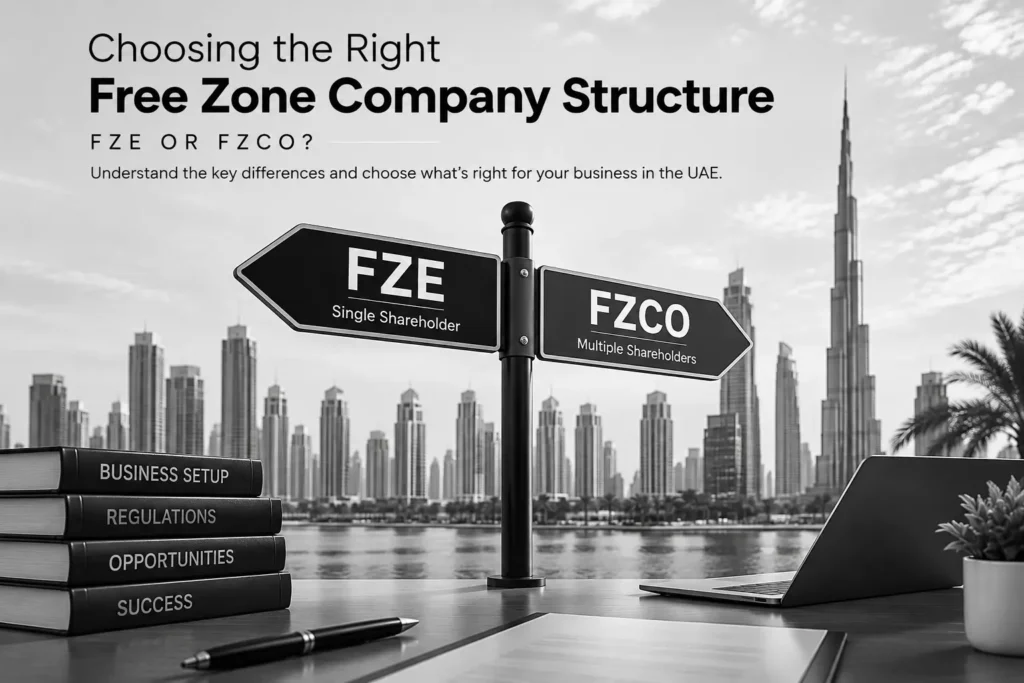
At first glance, the difference appears straightforward: an FZE allows for a single shareholder, whereas an FZCO permits two or more shareholders. Yet, according to legal practitioners, this simplified understanding masks deeper considerations related to governance, scalability, and future investment.
“Many businesses choose a structure based on speed or initial cost, without fully considering how that decision will affect them as they grow,” says a senior advisor at Ahmad Abdulla Ahli Advocates and Legal Consultants. “In practice, the wrong choice can lead to restructuring expenses, regulatory delays, or shareholder disputes later on.”
Understanding the FZE Model
An FZE, or Free Zone Establishment, is designed for businesses with a single owner, who may be an individual or a corporate entity. The structure provides limited liability and a relatively simple governance framework, making it attractive to sole entrepreneurs, consultants, and companies establishing wholly owned subsidiaries.
Because decision-making authority rests with one shareholder, FZEs often benefit from operational simplicity. However, this same simplicity can become a limitation if the business later seeks to introduce partners or external investors.
“Adding a second shareholder to an FZE typically requires converting the company into an FZCO, which is not always a straightforward process,” legal advisors explain. “It can involve regulatory approvals, amended incorporation documents, and additional costs.”
The Flexibility of an FZCO
Choosing the right Free Zone Company Structure depends on the number of shareholders, business goals, and future expansion plans.
An FZCO, or Free Zone Company, allows for multiple shareholders and is widely regarded as the more flexible structure. It is commonly used by partnerships, family-owned enterprises, startups with multiple founders, and businesses planning future investment rounds.
By allowing shared ownership from the outset, the FZCO structure is better suited to companies with long-term growth plans. It also tends to be more attractive to investors, who often prefer clearly defined shareholder arrangements and governance mechanisms.
However, experts caution that this flexibility requires careful legal planning. “With multiple shareholders, issues such as voting rights, profit distribution, and exit mechanisms must be clearly addressed,” advisors note. “Standard Free Zone templates are not designed to manage complex commercial relationships.”
Common Pitfalls in Free Zone Incorporation
Industry professionals observe that many incorporation challenges arise not from regulatory complexity, but from inadequate planning at the outset. Businesses that prioritize low-cost license packages or fast-track approvals may later face obstacles when expanding or restructuring.
These challenges can include delays in adding shareholders, difficulties in transferring shares, or compliance issues during audits and renewals. In some cases, companies are forced to undertake costly restructuring exercises that could have been avoided with proper legal advice at the formation stage.
Choosing the appropriate Free Zone Company Structure at the beginning can help businesses avoid future ownership and restructuring difficulties.
The Importance of Legal Advisory
While administrative service providers play an important role in processing incorporation documents, legal experts emphasize that Free Zone company formation is fundamentally a legal structuring decision.
“A business license can be issued quickly, but correcting a structural mistake can take months,” says one advisor. “That is why legal input should come before administrative execution, not after.”
Law firms advising on Free Zone incorporation typically assess a company’s business model, ownership plans, and growth strategy before recommending a structure. This approach aims to ensure compliance, protect shareholder interests, and allow for future expansion without unnecessary constraints.
Selecting the right Free Zone Company Structure can help businesses avoid unnecessary restructuring costs as they grow.
Businesses should also review the relevant UAE business regulations before establishing a Free Zone company.
Choosing the Right Free Zone Company Structure
As the UAE continues to attract international investment, awareness is growing around the importance of choosing the right Free Zone company structure. The decision between an FZE and an FZCO, experts say, should be guided by long-term strategy rather than short-term convenience.
For businesses entering the UAE market, the message from legal professionals is clear: the success of a Free Zone company often depends as much on how it is structured as on where it is incorporated.
In an increasingly competitive business environment, making the right choice at the beginning may be the difference between smooth growth and costly restructuring down the line.
FZE vs FZCO: Which Structure Supports Future Growth?
Businesses should consider their future ownership and expansion plans before selecting a structure. An FZE may be suitable for a single-owner business, while an FZCO can provide more flexibility when multiple shareholders or future investors are involved. Making this decision early can help reduce the need for restructuring later.
Frequently Asked Questions
What is the main difference between an FZE and an FZCO?
An FZE generally has one shareholder, while an FZCO allows multiple shareholders.
Which structure is suitable for multiple business owners?
An FZCO is generally suitable for businesses with two or more shareholders.
Can an FZE be converted into an FZCO?
Conversion may be possible, but it depends on the relevant free zone’s rules and approval requirements.
How should businesses choose between an FZE and FZCO?
The choice depends on ownership plans, business goals, and future expansion needs.
Is legal advice important when selecting a Free Zone company structure?
Yes. Legal advice can help businesses avoid ownership, compliance, and restructuring issues.
Conclusion: Choosing the Right Free Zone Company Structure
Choosing the right Free Zone Company Structure is an important decision for businesses planning to establish or expand in the UAE. While an FZE may suit a single shareholder, an FZCO can provide greater flexibility for businesses with multiple owners. The decision should be based on ownership requirements, long-term goals, and future expansion plans. Seeking proper legal advice at the beginning can help businesses avoid unnecessary restructuring costs and support smoother growth.